Rattlesnakes everywhere.
For me, at least, this has been the Year of the Snake, and I’m more than ready for those things to crawl under a couple rocks for the winter. I will say that I appreciate the rattlesnake for the ample warning it gives, rather than going straight for the biting offense as defense displayed by many venomous snakes in the world. I do, I do. However, having experienced the startling buzz accompanied by coiled strike pose only feet from my own—multiple times as of late—I’d prefer to have a few months free from further encounters. I suppose the body’s flight mode response does boost the heart rate while high-stepping to the side of a trail mid-run, but I’d rather hit those numbers climbing hills than leaping into cacti. I’m looking forward to looking up and out, rather than scanning vigilantly downtrail all the time.
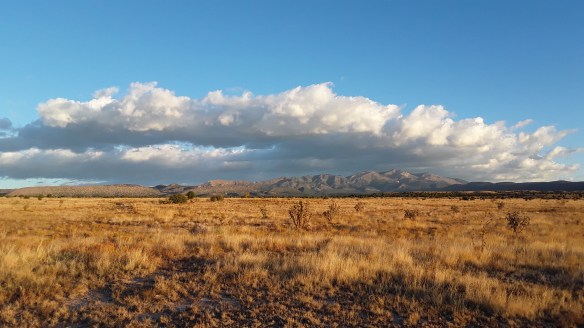
Idaho has more rattlers than anywhere, as far as my personal observations have shown, though I started writing this in New Mexico after pulling into the El Morro campsite and spotting a small diamondback immediately after exiting the vehicle. Two days later, I was riding my bike in El Malpais and stopped to watch a very large diamondback work its way across a dirt road. On both of these occasions, there was no major reaction from either of the snakes or myself, but that has not been the case most of the summer, now officially fall.
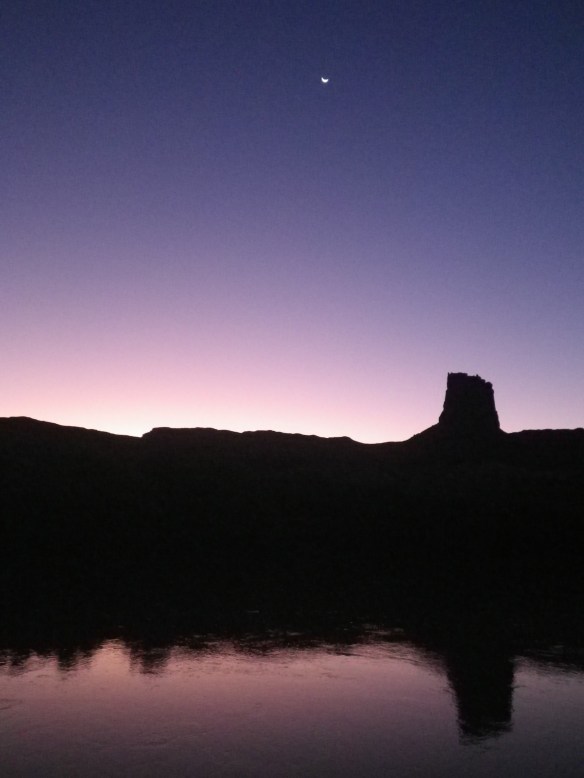
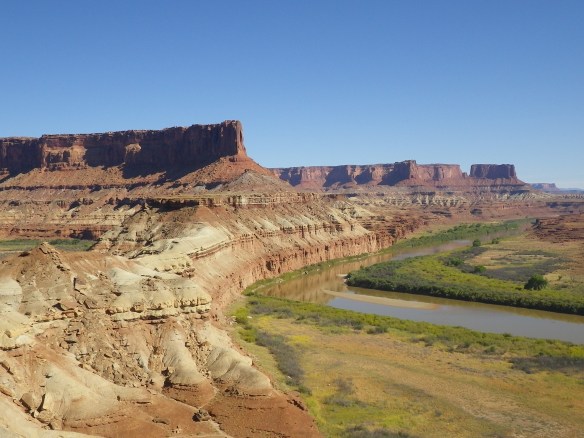
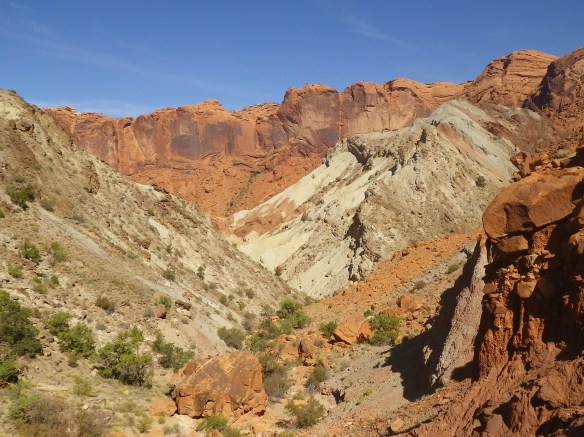
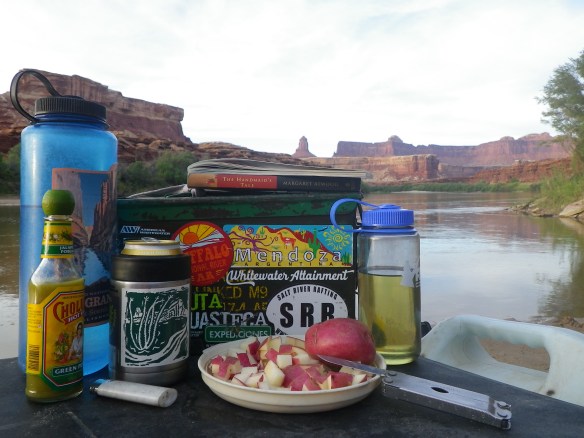
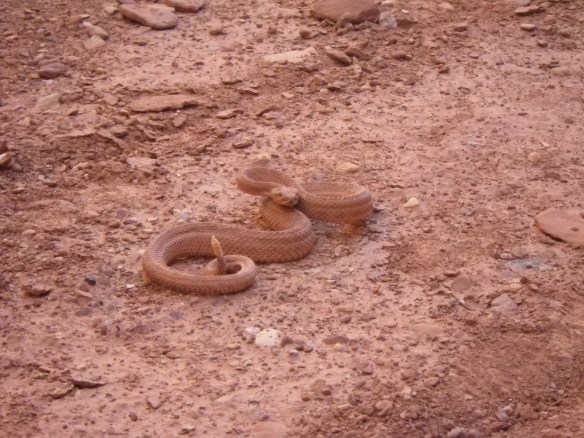
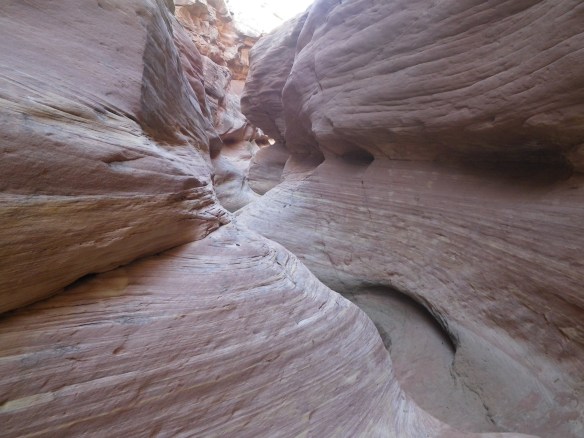
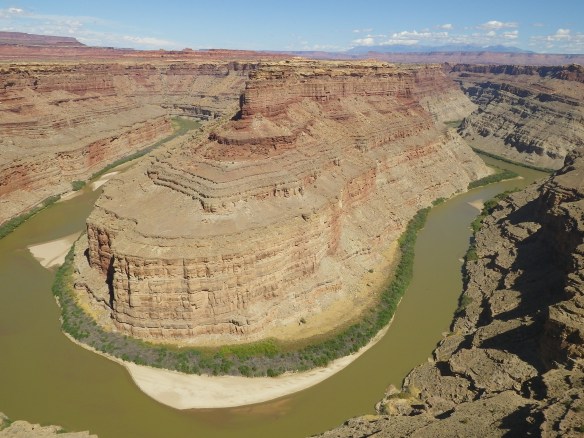
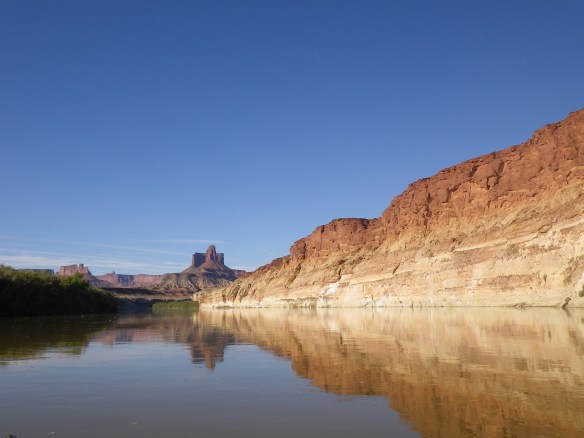
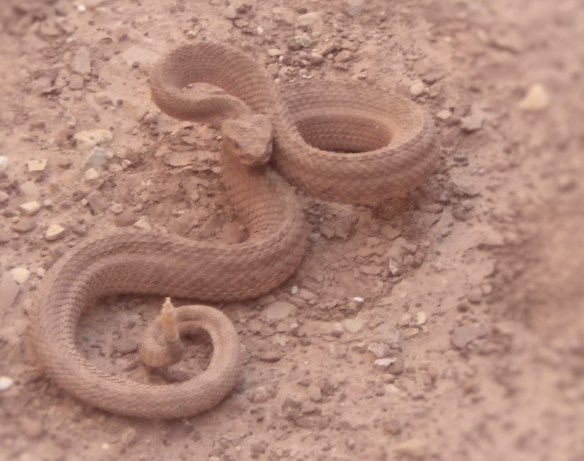
A week before, I was in Utah canoeing a couple of canyons on the Green River, which I posted about (Labyrinth and Stillwater) including a photo and mention of this next incident. I was off on a side-hike up an abandoned meander near Bonita Bend; where the river once flowed is now a dry loop around a mile or so in distance. Earlier in the day, I happened upon a slot canyon while running up on the mesa above the river. I worked my way down the canyon for a half-mile or so, then went back to my boat with the intention of hiking the entire thing from below rather than going all the way to the river and returning. As I paddled down the river to what I thought would be the mouth of the slot canyon, I began to realize that the two weren’t going to intersect after all, and deduced that the entrance most likely sat at the back of the dry bend. It was a hot sandy walk in the old riverbed to where they met, but once I arrived, tall cliffs shaded a wide swath of pink gravel. The shade was a welcome respite from the sun, and I could see the slot canyon just ahead. Happy to have figured out the location, and relieved by the coolness of the air, snakes were the last thing on my mind. In the beginning of the trip, still maintaining the awareness I developed in Idaho, I’d been keeping an eye out for snakes of any sort. I only saw one little baby snake, and seemed to remember not seeing many snakes in Utah all the times I’d been there before—just hundreds of lizards running all over the place. It was now my 5th or 6th day on the river, however, a lapse in vigilance having returned as a result of many uneventful hikes on the way down. Anyway, guard down, especially in the open expanse of shaded sand, a sudden BUZZ-BUZZ-RAPID MOTION in my peripheries, was followed by ridiculous vocal reaction from me and a hurried leap into the air. A freakin’ pink rattlesnake, exactly the color of the surrounding sand, shaking its thing while assuming an aggressively contorted coil only a foot from my walking trajectory. It was two-feet long and skinny as can be, but that multi-coil meant business and this thing was ready for action. I was not. Uuugh.
If you have never heard the sound of a rattlesnake before, it’s actually kind of hard to describe, and nothing like the toy baby-rattle soundbites of old westerns. It’s much quieter and perhaps akin to a high-voltage buzz of electricity or a pair of overworked hair clippers. When I haven’t experienced it for a couple of years, I often forget what it is when I first hear it. Grasshoppers and grassy desert plants seem to mimic the noise once you’re on full alert, but before then it doesn’t sound too out of the ordinary, until vestigial instinct kicks in and you realize you’re being a dumb ass for not moving as quickly as possible in the opposite direction.
All of these recent snake sightings led me to recount my experiences this past summer in Idaho, which led to a reflection on all the times I’ve ever seen a rattlesnake. It was actually quite interesting as one memory led to the next and on to the next, leading me to consider how impactful brushes with danger, either real or perceived, can be. This, in turn led to reflection on topics pertaining to arguments for keeping top predator species in the wilderness, as well as some of the reasons many people venture into the outdoors in the first place. Unknown variables have the potential to create visceral experiences, heightening awareness and involvement and leaving formative memories. It’s certainly true that these incidents can lead to injury, horror, discomfort, and death, but for many, the greatest rewards often come with a certain amount of risk.
I digress. Back to the snake stories.
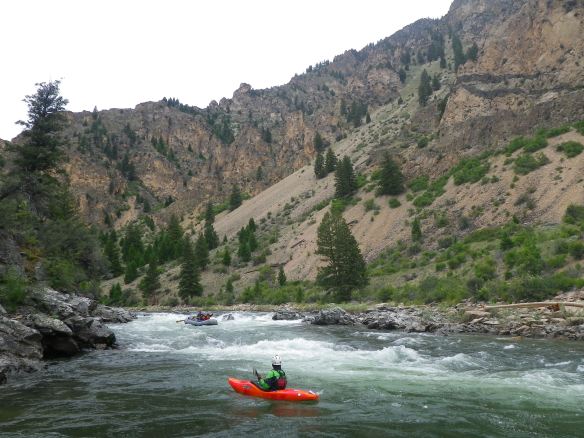
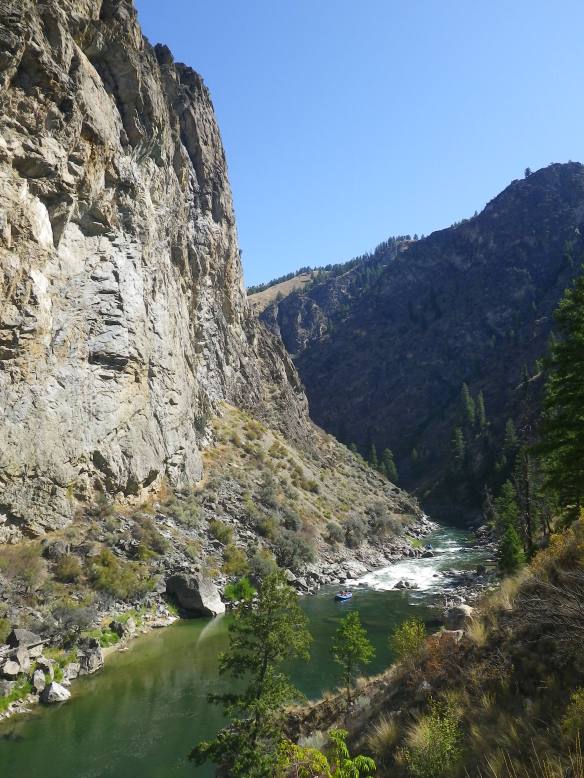
The first encounter in Idaho this past summer was on a dusky after-dinner run. A few minutes up the trail there it was, the buzzing, the coiled striking pose. This was indeed a time when it took a couple of seconds for my brain to connect the noise to the danger. I might also add that it’s an awkward movement to brake mid-stride. Once stopped, a brief staredown ensued and I almost turned around, as it was near dark anyway, but I decided to take the long way around instead, marking the spot mentally for my return. When the snake was nowhere to be seen on the way back, it was worse than if it had been, the obvious question being “where the hell is it now?” Never saw it again, however, though did see the second one of the season a couple days later at Veil Falls. After that, they were all over the place. Another week we saw four in one trip down the Middle Fork, including one menacing bastard at Tumble Camp which the trip leader decided to “flag”/cordon off, leaving it to its own desires even though it was only a few steps away from where the rafts were tied up for the evening. Bad plan. An hour later I was carrying some water buckets down the hill to be filled, when someone loudly announced that the snake was gone. I instantly found myself leaping over the refound snake from one rock downhill to the next as it gave impatient warning directly below. It then struck at one of the other guides a couple minutes later before someone was able to scare it into the bushes next to the kitchen where we could fret about it for the next 15 hours. A couple weeks later, now alerted to the possibility (or imminence) of their presence, I was running up Sheep Creek on the Main Salmon trying to avoid the unavoidable poison ivy and watching for snakes at the same time. Sure enough, there was one, this time more surprised to see me than I it, though every bit as ready to spring into a coil as I began to backpedal.
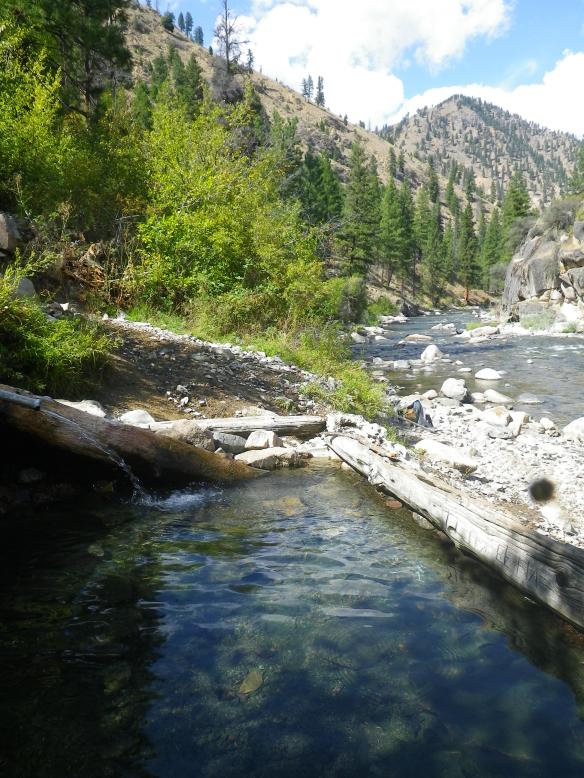
In addition to my own encounters this season, one of my friends down in the Big Bend was actually bit outside of his house one night. $80,000 dollars in hospital bills later, the anti-venom is not cheaply produced nor obtained, he is reportedly most thankful that he, not his young son who was beside him, was targeted. Just before leaving Idaho, I met a young family at a hot springs with a 12-year-old girl who had also been bitten this year. This time the snake was a baby rattler; having no buttons to rattle, it was unable to produce any noise to warn off potential threats, relying instead on striking as its primary defense. From talking to them, I did get a confirmation from what I’ve long heard repeated, which is that the babies can indeed be more dangerous than the adults. This is due to their inability to control the amount of venom released, giving their victims a full dose, whereas a large percentage of adult bites are actually dry bites free of venom.
The first rattlesnake I ever saw in my life was probably also the biggest, and I’m thankful that I haven’t run into any of its size since. I was probably around 10. We were on vacation in Guadalupe National Park and watched a fabled diamondback, at least 6’ in length, from the security of the family wagon as it calmly snaked its way across the dirt road. Terrifying and fascinating both, and easier to appreciate from the window of a car. Strangely, however, that is the only rattlesnake I remember seeing my whole time growing up—years of living in the panhandle of Texas and spending a fair amount of time in the woods and even wandering around looking for snakes to catch and handle. (I still remember being shat upon—a potato salad looking dollop with a truly repulsive smell, a defense I’m told—by a hog-nosed bull snake I picked up while working at a scout camp one summer.)
The next rattler I remember seeing after that, as an adult that is, was while walking on a trail in Durango, Colorado. I recall thinking then about how odd it was that I had managed to go all those years in the Panhandle without seeing a single one.
Back in the Panhandle years later, however, I inadvertently ran over a baby rattler with my skateboard while messing around in a massive full-pipe near where I grew up. A 25’ tall, 100’+ long section of concrete pipe surrounded by nothing but steep-walled concrete high above a reservoir seemed like the last place one would find a rattlesnake, but there the poor thing was with half its skin ripped off from being rolled over in the near-dark of the tunnel. A friend put it out of its misery with a quick chop from the tail of his deck.
I will note here, that this one and one other, a shifty lurker in an indoor shed full of plywood, are the only snakes I have ever harmed. I certainly believe in leaving them alone in their own environments, and in no way condone the killing of any species merely because it poses a trivial threat to humans. Snakes, an integral part of many ecosystems, should certainly be allowed to go about their business. From now on, however, when the situation dictates, I will always move them away from camp, which actually I’ve always done in the past before the previous mentioned Tumble incident this past summer. There was one that intentionally crawled into our camp one evening in Santa Elena Canyon, doing its best to slither up to the circle of clients, causing me to encourage it back towards the river by shoveling sand at it with a canoe paddle. It reluctantly swam across the Rio Grande and was not seen again. Another one at the old lodge camp on the Forks of the Kern in California received the same treatment from Tom P., which is where I learned the trick in the first place. “Go on, get on out of here,” Tom admonished while plying it with dirt. The snake complied and crawled into its den. An hour later an annoyingly arrogant client, already upset and embarrassed to have left his and his date’s sleeping pads at home, decided to set his tent up about 3’ from the hole. “What? You think it’s going to come back out of there tonight?” he exclaimed when we asked him if he thought that was a good idea.
One trip I did down the Dolores River in Colorado was particularly noteworthy for the wildlife. Our first night’s camp featured a group of big horn rams only about 200’ from the kitchen site. They spent all evening taking turns leaping onto a huge slab of rock to challenge one another to head-butting competitions. It was like their private boxing arena, and as the skull-bashing ensued, the rest of the group, freshly concussed from their own rounds, would simply spectate while the next pair went at it. The following night, we camped in a stand of conifer trees. Pine needles covered the floor around us, though as we sat to eat our dinner, some of the ‘needles’ appeared to be in motion. Turned out to they were tiny baby rattlesnakes, only a couple of inches in length each one, the size of pinky fingers, perhaps freshly born as we counted at least seven of them working their way across the ground around us. It was reluctantly that I lied down to sleep that night, as I hadn’t bothered to bring a tent, my warm body surely a beacon for anything seeking heat. Speaking of seeking heat, there was also the time on the Jarbidge when Chad went to pack up his tent the first morning only to find two snakes snuggled below it. Reluctant to give up the shelter they tried to get back underneath the floor each time he moved it from place to place hoping to dismantle it.
There was the one time in the Grand Canyon when we were sitting on the ground in our Crazy Creeks reading. I saw one moving slowly along only a couple feet behind V, who was deeply involved in a book. ‘Don’t freak out, but there’s a rattlesnake right behind you crawling towards your chair…’ There was another time the two of us were walking on the Kern River trail and I ducked under a tree hanging over the path only to find one in full coil. ‘Ha, you jumped!’ she laughed. ‘Yeah, what the hell would you have done?’ There was the time KJ stepped on a rock going down a Salt River side canyon and the rock buzzed loudly beneath her. There was the one on my way back down White Canyon in Arizona just downstream from Lake Mead. I inadvertently found myself returning down the wash in near dark having had to escort a dehydrated and disoriented hiker a couple miles back to the parking lot. That one was close, I’d say. Flip-flops and what seemed like a few inches from unseen fangs at the other end of the caution. There were multiple encounters in the Dome Rocks wilderness while taking a group of high schoolers backpacking. The list goes on.
I do have a favorite story, however, which I will end with. A couple of years ago I was back in the Panhandle visiting. My dad and I went out for a hike near Lake Meredith one morning, hoping to find an obscure ruin site near the Canadian River. It was only mid-April, but it was hot out and had been a particularly warm spring. My pops had already seen several rattlesnakes out that year, and as such, was wary of seeing more. We waded across the river and found ourselves on a grown-over jeep track, which we planned to follow to the approximate location of the site. Somewhere along the way we wandered off the trail and suddenly found ourselves in dry calf-high grass. It felt kinda snakey, you might say. For some reason, however, we decided not to backtrack, but to instead move forward through the grass until we intersected the track again. It seemed like kind of a bad idea, but who wants to turn around? As my dad happened to be carrying a trekking pole, I fell in line as he began to methodically whack at the grass in wide arc in front of him. The motion was that of a blind person moving with a cane, but slow, deliberate, and increasingly tedious. Whack, whack, whack. Whack, whack, whack. One step forward. Whack, whack, whack… Another step forward. This went on for some while as we inched forward toward our goal, which we could see in the distance. Many minutes later, I grew impatient. We’d certainly walked through many a grassy field without the fanfare. Whack, whack, whack… Whack, whack, whack… Just as I opened my mouth to proclaim the ridiculous nature of the situation, one more whack sprung the snake, only a few feet to our left and from what must have been flat to fully erect and furiously buzzing in a hot second. The tension was released, the danger revealed and negated by distance, and it was unbelievably comical. I laughed on and off for the rest of the day, and will always have a rattlesnake to thank for the smiles I still get thinking about it.

 Sometime this past summer I started thinking about Baja. Not sure why I hadn’t considered traveling there before, but I began dreaming up a couple of bigger trips I’d like to do in the region, both on water and on land. Before I ended up in Spain I’d been considering the possibility of driving on down and staying for a while. That hasn’t happened yet, but when I found myself with a couple additional weeks of Kafkaesque frustration in waiting on a future dependent on government paperwork and faceless inefficiency, I decided to go for a visit, some recon, a vacation, something sunny and somewhat productive to do in the meantime—call it what you will. No matter what, it seems like Mexico is always a good idea.

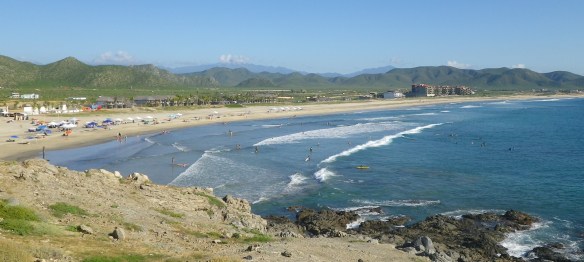 Ended up in the sleepy town of Cerritos ten years too late, but still enjoyed spending a few days in what was once a quintessential Mexican fishing village turned surf spot. The area is currently being hammered by development and habitat destruction, with a vibe trending hard to gringo tourist, but it was a good place to flail around with a surfboard for a few days. The afternoons were hot and humid, and the nights crisp and cool on an empty beach. It was fish tacos and a couple of Indios each evening, and in bed with a book around 8 p.m. listening to the exploding surf through the frond walls of a palapa. A couple good runs, lots of walking around, a few decent waves, and color filled skies at dusk. Super tranquilo.


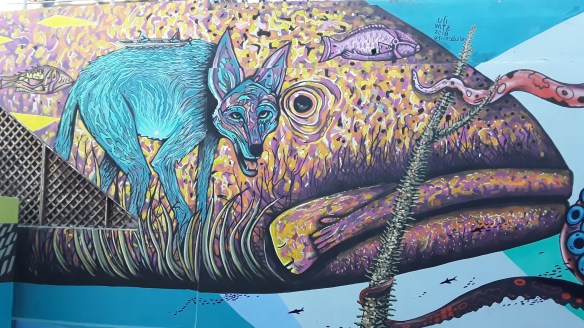 Check out: Colectivo Tomate


 My last day in town was Saturday, and I joined an all-day tour out to Isla Espiritu Santo. I rarely sign up for group tours, but when I do it’s always fun to watch the guides in action, to experience the day from the other side, to hear the same tired guide jokes I’ve personally repeated hundreds of times. And the tour itself was awesome: a morning boat ride out to the island, checking out a frigate rookery, swimming around with sea lions, a ceviche lunch, a lucky encounter with a pod of playful dolphins, and snorkeling with whale sharks to end the day. The activities/ecosystems also seemed to be responsibly managed and protected, which was uplifting to see. That evening there was a big holiday affair on the malecón, complete with loads of food vendors, a night boat parade, and fireworks. An entertaining end to the week.


 From there it was up early in the morning and out of La Paz. On to Guadalajara, Juarez, and over an hour of standing in a barely moving line with hundreds of people on the international bridge waiting to process though customs. Once across, it was a couple hours in downtown El Paso, vibrant and lit up for the holidays, and then back to the hyper-depressed reality of bus travel in the US. It was up to Albuquerque again, and over to Amarillo, and into low clouds and gray skies and cold wind and dreams of deserts and oceans and sunshine. It was smiles from thinking about conversations with locals, and all the tacos consumed, and simply knowing that it’s all down there, whether I ever make it back or not.